


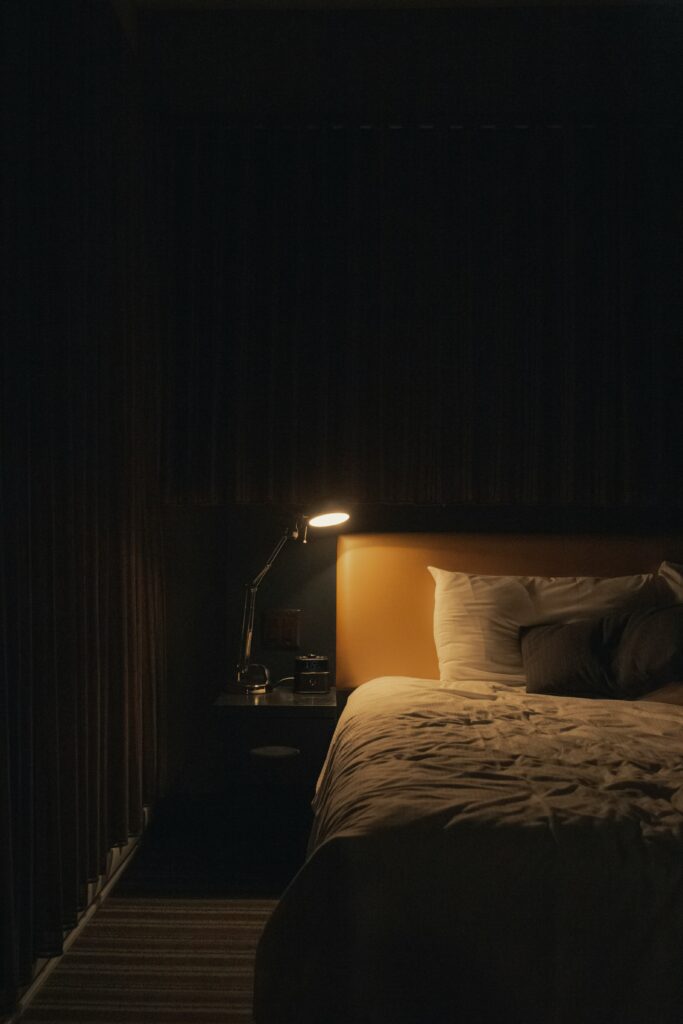
Most people know they should sleep better. The problem isn’t information. It’s that the advice is usually too vague to actually use. “Avoid your phone.” “Go to bed earlier.” “Wind down.” These are not routines. They’re suggestions with no structure behind them.
What research actually shows is that building a good night routine comes down to a few specific, evidence-backed habits.
Here’s what the science says.
The most important thing isn’t how long you sleep. It’s how regularly you do it.
This might be the most underappreciated sleep finding of the last few years. A 2024 study published in the journal Sleep, drawing on data from over 60,000 people, found that sleeping and waking at consistent times each day is a stronger predictor of how long you live than how many hours of sleep you get.
To be specific: people with the most stable daily sleep patterns had a 30% lower risk of dying from all causes compared to those with the least consistent timing.
This matters because most people focus on getting 7 to 8 hours, which is important, but regularly going to bed at midnight one night and 2am the next throws your body’s internal clock off in ways that build up over time. Research links inconsistent sleep schedules to higher rates of depression, anxiety, high blood pressure, heart disease, and even a significantly increased risk of dementia.
The practical takeaway: pick a bedtime and a wake time and stick to them, including weekends. This single change is more impactful than most supplements or sleep products on the market.
Light is controlling your sleep more than you think
Your body uses light as its main signal for when to be awake and when to wind down. Specifically, it responds to blue light, the kind produced by phone screens, laptops, LED bulbs, and most overhead lighting.
Research confirms that blue light suppresses melatonin, the hormone your body produces to prepare for sleep, more strongly than other types of light. Melatonin is essentially your body’s natural sleep signal. When blue light delays its release, your brain stays in “awake mode” longer than it should. A Harvard study found that blue light suppressed melatonin for about twice as long as green light and pushed the body’s internal clock off by twice as much.
What this means practically: the lighting in your home matters, not just your phone. Cool white LED bulbs cause significantly more melatonin suppression than warm white or traditional incandescent bulbs. If you can, switch to warmer bulbs in the rooms you use in the evening, dim your lights after 8 or 9pm, and reduce screen use in the hour before bed.
Night mode on your phone helps a little, but it doesn’t solve the problem. Lowering the overall brightness and warmth of light in your environment from the evening onward is more effective.
A warm bath or shower about 90 minutes before bed helps you fall asleep faster
This sounds counterintuitive. Why would warming your body help you sleep? But the science is clear.
Your body temperature naturally drops as you approach sleep. A warm bath speeds this process up. The hot water pulls heat toward your skin and away from your core. Once you step out, your core temperature falls faster than it normally would, and your body reads this as a signal to sleep.
A review of 13 clinical studies found that a warm bath or shower taken 1 to 2 hours before bed reduced the time it takes to fall asleep by an average of 36%. For someone who normally takes 30 minutes to drift off, that’s roughly 10 minutes saved, without medication.
Timing matters here. Bathing immediately before bed can actually delay sleep because your core temperature is still elevated. The sweet spot is about 90 minutes before you want to be asleep.
Your brain needs a buffer between the day and sleep
Sleep does not work like an off switch. Your brain needs time to shift from an active, problem-solving state to one that is ready for rest. Sleep experts recommend a 30 to 60 minute wind-down window before bed that involves calm, low-stimulation activities.
What you do in that window matters. Activities like light stretching, reading a physical book, or simple breathing exercises support the shift toward sleep. Checking email or scrolling social media keeps your mind stimulated and delays that shift.
One habit worth adding: spend a few minutes writing down your tasks or worries for the next day before bed. It sounds too simple, but putting things on paper quiets the mental loop that keeps a lot of people awake. You know the one, where you lie down and your brain suddenly starts reviewing everything you have to do tomorrow.
Watch what you eat and drink in the evening
Caffeine stays in your body longer than most people realise. It has a half-life of roughly 5 to 7 hours, meaning if you have coffee at 4pm, about half of it is still active in your system at 10pm. Research has found that regular caffeine intake delays the deeper, more restorative stages of sleep and reduces overall sleep quality. For most people, stopping caffeine by early afternoon is a safer guideline.
Alcohol is a common one people get wrong. It may help you fall asleep initially, but the effect wears off through the night and leads to broken, lower-quality sleep in the second half. Drinking regularly before bed disrupts your sleep architecture over time, even if you don’t notice it immediately.
Heavy meals late at night also work against you. Digestion requires energy and keeps your body in an active state when it should be slowing down. A light snack is fine. A full meal close to bedtime is not doing your sleep any favours.
Your bedroom environment matters
Even the best habits lose their effect in a room that is too warm, too bright, or too noisy. Sleep research consistently identifies a cooler, darker, and quieter room as one of the most reliable conditions for better sleep.
Most sleep researchers suggest a room temperature between 16 and 19 degrees Celsius as ideal, because your body’s core temperature needs to drop during sleep and a cool room supports that process. In warmer climates where this is hard to achieve, a fan and light, breathable bedding can help.
Darkness matters too. Even low levels of light coming into your room at night can interfere with sleep quality. If your room gets a lot of outside light, blackout curtains are one of the most practical upgrades you can make.
What a simple, workable routine looks like
You do not need to do everything at once. A routine that works is one you can actually repeat. Here is a simple structure to build from:
8:30pm — Dim the lights. Switch to warmer lighting. Caffeine should already be behind you by several hours.
9:00pm — Warm shower or bath, if that is part of your routine. Aim for about 90 minutes before your target bedtime.
9:30pm — Wind-down time begins. Put the phone down. Write down tomorrow’s priorities. Read, stretch, or simply sit quietly.
10:00pm — In bed. Room cool and dark.
The exact times are yours to adjust. What matters is the sequence and the consistency. Sleep experts point out that going to bed and waking at the same time each day is more important than the total number of hours slept, and the research backs that up strongly.
Start with one change. Look at this list and pick the habit you are currently getting most wrong, whether that is inconsistent timing, too much light in the evening, or caffeine too late in the day, and fix that one first. One well-kept habit will do more for your sleep than ten you do halfway.
At Lasena Steam Bath, we believe rest is not passive. It’s something you prepare for. Whether you’re visiting our natural steam bath and health resort or building better habits at home, quality sleep is the foundation everything else is built on.