

A friend of mine cancelled a spa day last month, spending the whole saturday sleeping instead, not leaving her bed until almost noon. Later when she told me about it, she didn’t call it self-care; She said, “I just needed to recover.” It stuck with me, mostly because it was the third or fourth time I’d recently heard someone use that word. (Nenye)
Self-care used to mean something specific and useful to do, something your body or mind is asking for, even when it’s inconvenient… But somewhere along the line, it got flattened into a marketing category. Candles, face masks, a slide in someone’s Instagram carousel with a pastel font telling you to “pour into yourself.”
Now the word Recovery is doing the job of Self-Care, to the extent that people sometimes use them interchangeably.
Self-care sells a feeling. Recovery describes a process.
Here’s the difference, as far as I can tell: self-care is usually about how something looks or feels in the moment. It’s a treat, a reward, a thing you post about because it photographs well. Recovery doesn’t really care about any of that. Nobody takes a picture of the exact moment their shoulders finally relax after a stressful week, or the nap that saved them on a random Wednesday. It’s not trying to look like anything. It’s just trying to work.
That distinction matters more now because more people are naming what’s actually wearing them down. A few years ago, “burnout” was the word everyone reached for: vague, floaty, hard to pin down. Now people are more specific about it. They’ll tell you exactly what’s depleting them: the deadlines stacked on top of each other, the sleep debt that’s been building for months, the low hum of always half-expecting a notification even when the phone’s in another room. You don’t fix that kind of specific, physical depletion with a scented candle. You fix it the same way an athlete recovers from a hard training block: sleep, stillness, heat, and time for the body to actually process what it went through, rather than being asked to look put-together while doing it.
Athletes never called it indulgent
It helps that “recovery” already had a reputation before wellness culture picked it up. Athletes have used the word for decades and never once treated it as soft. Ice baths, stretching, and sleep – tracked as real metrics of recovery, have always been part of the training, and not a break from it. Nobody ever accused a footballer of being lazy for taking a day to recover.
That’s the part I think people are borrowing when they reach for the word today. ‘Recovery’ comes with an obligation built into its implication, while Self-care can sometimes feel like it needs a good enough reason attached. Something like “I deserve this because my week was hard.”, while Recovery skips that justification. The body did something. Now it needs this. There’s no performance review attached to it.
What it actually looks like
In practice, recovery is a lot less exciting than self-care Sundays make it seem. It’s an earlier bedtime on a night when a show is calling your name, it’s a walk with no real destination, It’s leaving your phone face-down for an hour and letting your mind wander instead of scrolling through it, and it’s heat; actual physical heat, the kind that makes it hard for your body to stay braced because it’s simply too warm and too still to keep holding on.
That last one is worth pausing on because heat has been a recovery tool for much longer than “wellness” has been a word people use.
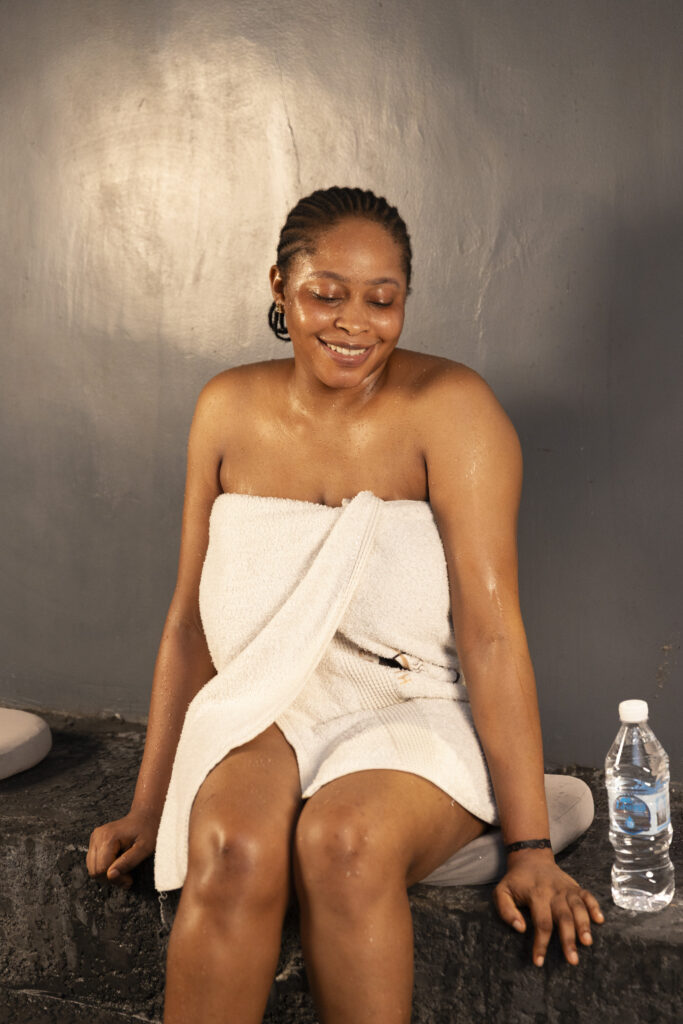
A steam room does something a bubble bath doesn’t quite manage. It gets into the tight, throbbing tension across your shoulders and jawline that builds up from a week of pushing through obligations.
That’s really the whole difference. Self-care adds something pleasant to your day while recovery asks what your body actually needs and gives it that, without dressing it up as anything more complicated than repair.